A chimney cap sits on the flue tile or the crown and does three jobs: it stops rain from rusting the damper and cracking the crown, blocks birds and squirrels from nesting in the flue, and its spark-arrestor mesh stops…
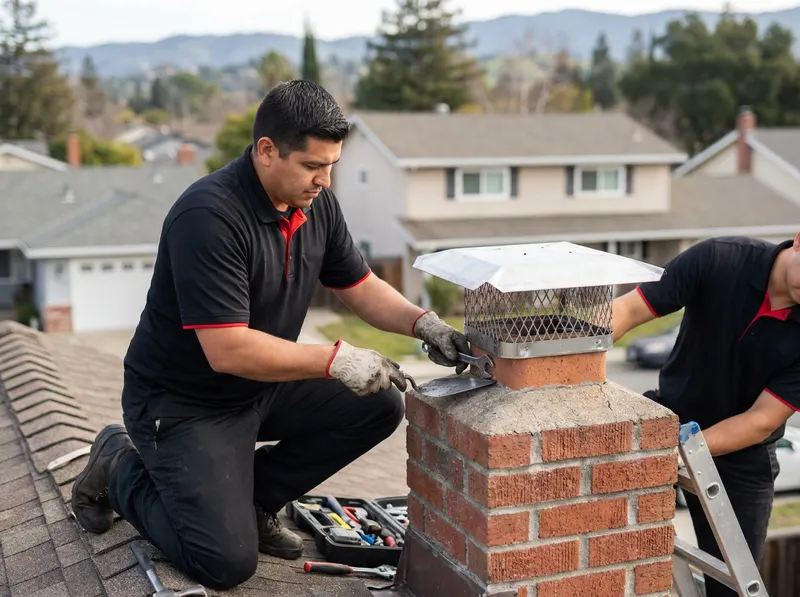
A chimney cap sits on the flue tile or the crown and does three jobs: it stops rain from rusting the damper and cracking the crown, blocks birds and squirrels from nesting in the flue, and its spark-arrestor mesh stops floating embers from landing on the roof. Wind is the most common failure in Mountain View. A cap held by friction-fit legs or a few screws can lift in a Santa Clara County winter storm, and homeowners near the open exposure around The Crossings, Whisman Station, and the ridgelines above Waverly Park report a cap that "blew back from the chimney" or landed in the yard. Where the cap is intact but loose, the fix is to reattach the chimney cap with new stainless fasteners or a proper masonry clamp rather than replace the whole unit.
Replacement is the right call when the cap is rusted through, the mesh is torn, or the cap is missing entirely. Galvanized caps common on older Old Mountain View and Monta Loma homes tend to rust at the mesh welds within 8-15 years; a 304-grade stainless cap resists that corrosion and is the standard replacement. The size decision follows the flue: a single-flue cap clamps to one exposed tile, while a multi-flue or outside-mount cap covers the entire crown and suits older brick chimneys in Cuesta Park and Sylvan Park where the tile edges have spalled. The trade-off is straightforward: a single-flue cap is cheaper and faster but only protects one flue; a full outside-mount cap costs more and covers the whole crown top, which matters when the crown itself is also cracking.
Crown repair often surfaces during a cap visit. The crown is the concrete or mortar wash sloping away from the flue at the very top of the chimney. Hairline cracks let water in, which freezes and widens the gap, and a failing crown will loosen a cap seated on it. Small crown cracks can be sealed with a flexible crown coating; a crumbling crown needs a rebuilt wash, which is a separate line item from the cap. NFPA 211 treats the cap, crown, and flue as parts of one chimney system, so a cap replacement is paired with a visual check of the crown and top courses of brick. A Level 1 inspection covers the readily accessible cap and crown; a Level 2 inspection, which adds a camera scan of the flue interior, is warranted after a storm, a chimney fire, or a real-estate sale, per CSIA guidance.
Every visit begins with a free on-site estimate: the cap size, mount type, and crown condition are confirmed on the roof and shown in plain terms before any work is authorized. If a cap simply needs reattaching, that is stated up front rather than upsold into a full replacement. Damaged chimney cap concerns from a smoking fireplace, a whistling draft, or animal noise in the flue are inspected during the same trip. Homeowners in Rex Manor, Willowgate, and Jackson Park who want a look before the cold season can send a photo of the roofline to speed the size match.
Every job gets a firm, written price after a free on-site visit.
Tell us about your chimney cap repair & replacement job in Mountain View and we'll send a clear, written quote, usually the same day.
 Flueforce Chimney Sweep