When a bird gets stuck in a Mountain View flue, or a homeowner in Cuesta Park or Waverly Park hears scratching above the damper, the fix is a two-part job: first remove the animal or the nest, then close the entry…
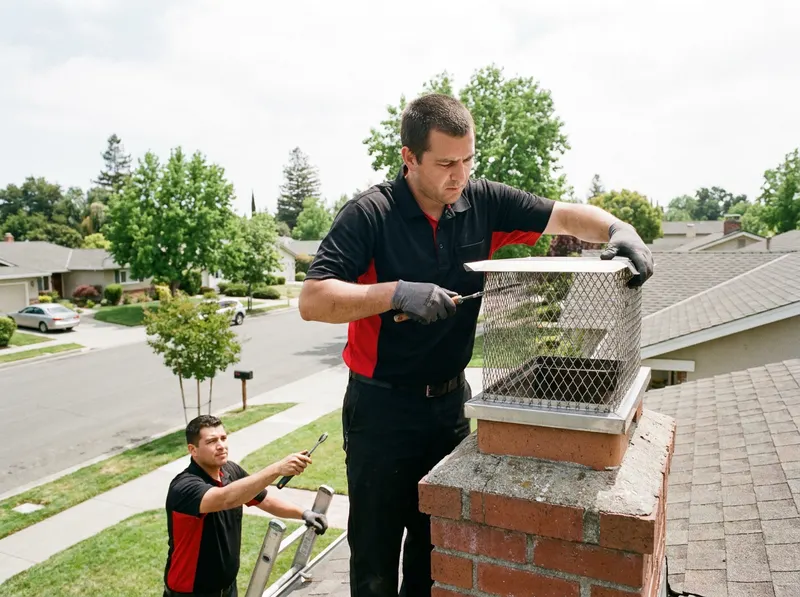
When a bird gets stuck in a Mountain View flue, or a homeowner in Cuesta Park or Waverly Park hears scratching above the damper, the fix is a two-part job: first remove the animal or the nest, then close the entry point so it does not happen again. Animal removal from chimney flues starts with a top-down look, a camera drops into the flue to confirm whether the blockage is a single bird, an abandoned nest of twigs and leaves, or a raccoon den built on the smoke shelf. Chimney swifts, a protected migratory species under the federal Migratory Bird Treaty Act, cannot be removed while actively nesting; in that case the safe path is to wait until the fledglings leave, then clean out the chimney and cap it. This detail matters because a homeowner who tries to remove a protected nest mid-season can face a violation, and the debris left behind is a known flue-fire and carbon-monoxide risk under NFPA 211.
The long-term defense against re-entry is a spark arrestor cap with animal mesh. The most durable option is a custom, ideally 316 stainless mesh animal spark arrestor, 316-grade stainless resists the salt-air corrosion that pits cheaper galvanized mesh, and a 3/4-inch or smaller mesh opening blocks birds, squirrels, and bats while still meeting the spark-containment intent of a code-compliant cap. To keep raccoons out of a chimney, the cap must be a heavy-gauge, screw-anchored unit rather than a friction-fit hood; raccoons can lift or peel back a loose cap, so the mount is what actually keeps the raccoons out. Older homes around Old Mountain View, Rex Manor, and Monta Loma often have an unusual clay-tile flue size, which is why a custom chimney animal guard is measured and fabricated to the exact tile dimension rather than forced from a stock cap.
Deciding what fits your situation is straightforward. If a single bird is trapped and there is no built-up nest, the job is a quick removal, a light cleanout, and a cap install. If there is a full nest packed on the smoke shelf, common in Sylvan Park, Jackson Park, and The Crossings after a season of disuse, expect a full cleanout plus a Level 1 inspection to confirm no flue tiles were cracked by animal activity. If the camera shows staining, honeycombed creosote, or a suspected liner gap behind the nest, that upgrades to a CSIA Level 2 inspection, which scans the full flue interior with a camera before any cap goes on. The trade-off is time and cost: a bird-only visit is short and inexpensive, while a nest with liner concerns takes longer because the flue must be verified sound before it is sealed shut behind a new cap.
Homeowners near Whisman Station and Willowgate frequently ask whether a cap is worth it if the fireplace is rarely used. It is, an uncapped flue is an open invitation, and the same 316 stainless mesh that stops sparks also seals out rain, animals, and debris year-round. A free on-site estimate confirms flue size, cap type, and the exact price before any work begins, and the camera footage is shared so the recommended work is visible, not assumed. Reach the shop at (408) 550-9928 to get some quotes.
Every job gets a firm, written price after a free on-site visit.
Tell us about your animal removal & spark arrestor job in Mountain View and we'll send a clear, written quote, usually the same day.
 Flueforce Chimney Sweep